

EUDR and Tyres: Are Retreaded Tyres Still in Scope?
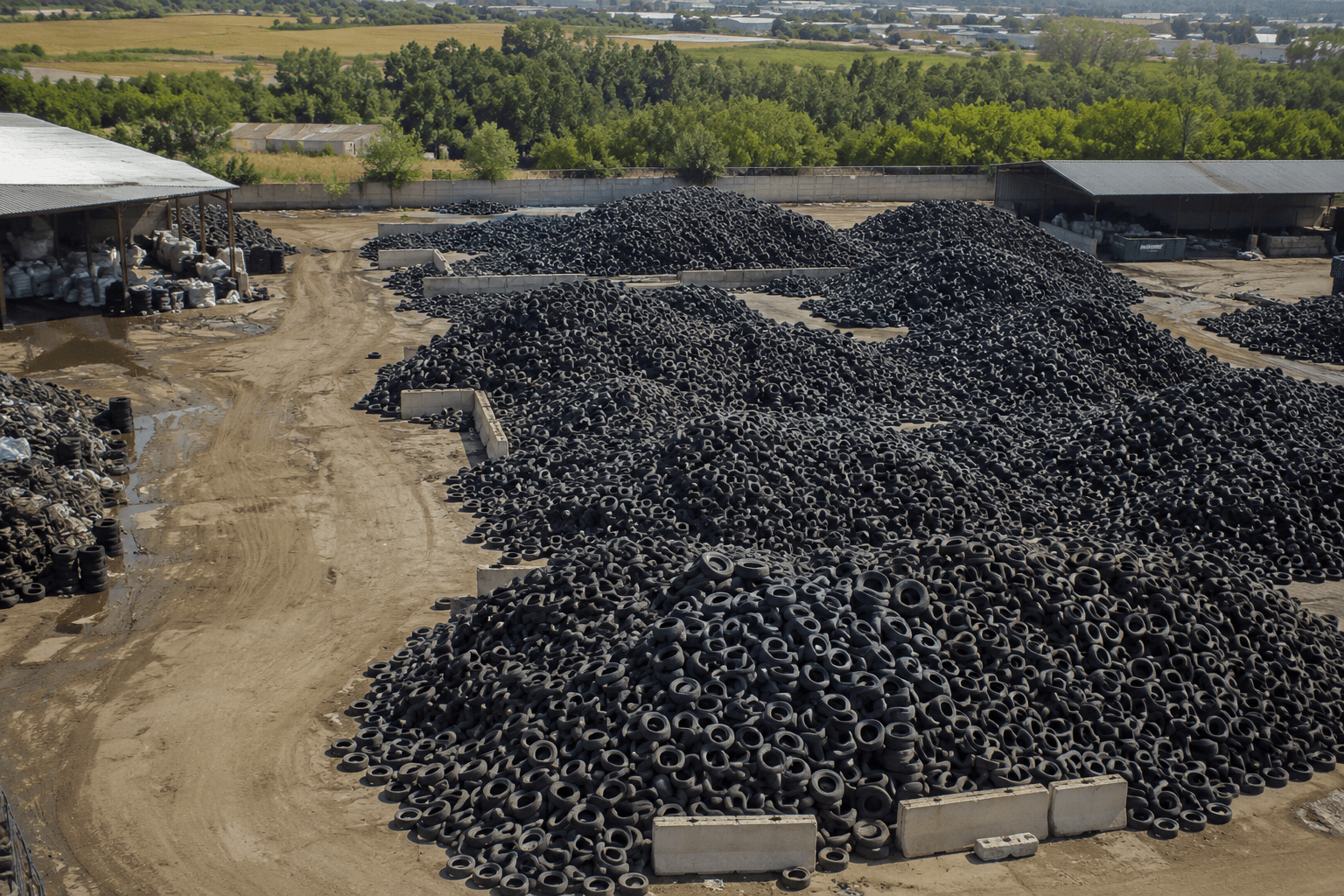
The European Commission has adopted a targeted amendment to the product scope of the EU Deforestation Regulation, or EUDR.
Under the amendment, retreaded and used tyres would be removed from the scope of the Regulation. The new rubber tread applied during the retreading process would remain covered where it contains natural rubber.
The distinction is important for tyre manufacturers, retreaders and importers. The exclusion of the finished retreaded tyre does not remove EUDR obligations from newly introduced natural rubber.
The amendment is not yet in force. It must first be reviewed by the European Parliament and the Council and published in the Official Journal of the European Union.
What has the Commission proposed?
The current EUDR product list includes new tyres, retreaded tyres, used tyres and tyre treads under different customs classifications.
The delegated act adopted on 13 July 2026 would narrow this scope. Instead of covering the wider category of retreaded and used tyres under heading 4012, the Regulation would cover only new rubber treads under CN code 4012 90 30.
The intended result is:
- new tyres containing natural rubber remain covered;
- new rubber treads used for retreading remain covered;
- the completed retreaded tyre is removed from scope;
- used and second-hand tyres are removed from scope.
Because the delegated act is still undergoing scrutiny, businesses should not yet treat the revised scope as legally final.
Why are retreaded tyres being removed?
A retreaded tyre consists mainly of an existing tyre casing that is prepared and fitted with a new tread.
The casing has already completed a previous period of use. Requiring the retreader to reconstruct the original natural-rubber supply chain for the entire casing could create significant traceability work, even though the retreading process only adds a comparatively limited amount of new rubber.
The Commission also recognised the circular-economy value of extending the useful life of tyre casings.
The proposed approach therefore separates the reused component from the newly added material. The casing is excluded, while the new rubber tread remains subject to the EUDR.
Are new tyres still covered?
Yes.
New pneumatic tyres classified under the relevant Annex I code remain within the EUDR where they contain natural rubber.
Many tyres contain a combination of natural and synthetic rubber. In that case, due diligence is required for the natural-rubber ingredient, not the synthetic component.
There is no general minimum percentage below which natural rubber can be ignored. A tyre does not fall outside the Regulation simply because natural rubber represents only part of its total material composition.
Companies should therefore confirm both the customs classification of the tyre and whether natural rubber is present.
What remains covered during retreading?
The new tread applied to the used casing remains relevant.
Where the tread contains natural rubber, the operator first placing it on the EU market or exporting it must ensure that the applicable EUDR conditions have been met.
The natural rubber must be:
- deforestation-free;
- produced in accordance with the relevant laws of the country of production;
- covered by the required due-diligence information.
The commercial description of the component does not change this. A pre-cured tread, tread strip or other replacement tread can remain in scope where it falls under the relevant customs code and contains natural rubber.
The EUDR position therefore depends on the newly introduced material, not on the fact that it will later be attached to a reused tyre casing.
Does a retreader still have EUDR responsibilities?
Potentially.
The completed retreaded tyre would be excluded if the delegated act enters into force as adopted. However, a retreading business may still be affected where it:
- imports natural rubber into the EU;
- imports new rubber treads;
- manufactures and places new treads on the market;
- exports covered rubber products from the EU.
A retreader purchasing treads that have already been placed on the EU market may have a different role from a business importing those components directly from a third country.
The relevant entity, transaction and customs code must therefore be assessed separately. The exclusion of the finished retreaded tyre does not create a general exemption for the retreading supply chain.
What about tyres made entirely from synthetic rubber?
The EUDR only applies to products listed in Annex I where they contain or are made from the relevant commodity identified for that product category.
For tyres, the relevant commodity is natural rubber.
A tyre made entirely from synthetic rubber is therefore not covered merely because it falls within a customs heading that can also include natural-rubber tyres.
Companies relying on this position should be able to support the material composition. A general product description such as “rubber tyre” may not establish whether natural rubber is present.
Are vehicles covered because they contain tyres?
No.
The EUDR applies to the products specifically listed in Annex I. Vehicles are not brought into scope simply because they contain tyres made with natural rubber.
For example, a company purchasing compliant tyres in the EU and using them to manufacture cars does not become an EUDR operator merely by selling the completed vehicles.
The position changes where the vehicle manufacturer imports the tyres itself. Importing an in-scope tyre for use in the company’s own manufacturing process can constitute placing the tyre on the EU market and can trigger operator obligations before customs release.
The assessment therefore follows the tyre transaction, not only the final product sold to the customer.
What about used tyres that become waste?
Removing used tyres from the EUDR does not determine whether they are products or waste.
A second-hand tyre that remains suitable for further use may continue to be traded as a used product. A tyre that has been discarded and is being moved for recovery or treatment may qualify as waste.
Waste tyres remain subject to waste-management and, where transported across borders, waste-shipment rules.
The EUDR exclusion should not be interpreted as permission to export waste tyres as second-hand goods. Product status and waste status remain separate legal questions.
When will the EUDR apply?
The EUDR will generally apply from:
- 30 December 2026 for large and medium-sized operators and for certain micro and small operators already covered by the former EU Timber Regulation;
- 30 June 2027 for other micro and small operators.
The delegated act removing retreaded tyres must still complete the EU scrutiny process before it can enter into force.
If it enters into force as adopted, the narrower tyre scope should be in place before the general EUDR application date. Until then, companies should follow the legislative status rather than relying only on the Commission’s announced policy position.
How are tyres made from earlier rubber stocks treated?
Natural rubber or relevant rubber products placed on the EU market before the applicable EUDR date may benefit from the transitional rules.
Where a new tyre is later manufactured from natural rubber that was already placed on the market before the EUDR became applicable, the business must be able to provide conclusive and verifiable evidence of that earlier market placement.
Relevant evidence may include customs documents, invoices, delivery records or other dated commercial documentation.
The absence of a due-diligence statement for transitional stock does not remove the need to prove that the material genuinely entered the market before the relevant deadline.
Does the change affect tyre EPR?
No.
The EUDR and national tyre EPR systems address different obligations.
The EUDR concerns the origin and legality of natural rubber and whether covered products are linked to deforestation or forest degradation.
Tyre EPR concerns the management of tyres once they reach the end of their useful life. Depending on the country, this can include producer registration, reporting, environmental fees, collection and financing the treatment of waste tyres.
A retreaded tyre may be excluded from the EUDR while still counting as a tyre placed on a national market for EPR purposes.
Similarly, compliance with the EUDR does not replace national tyre registration or reporting.
What should tyre companies verify?
The main questions are limited but important:
- Which tyre and tread products are placed on the market or imported separately?
- Which customs codes apply?
- Which products contain natural rubber?
- Is the company dealing with a new tyre, a new tread, a used tyre or a waste tyre?
- Which entity first imports or places the relevant product on the EU market?
- Can transitional rubber stocks be linked to reliable market-placement evidence?
Companies involved only in the sale of completed retreaded tyres may see a significant reduction in EUDR scope. Businesses importing natural rubber, new tyres or replacement treads will still need to assess their obligations.
How Viron can support
Viron helps tyre producers and importers distinguish between EUDR product-scope questions and national tyre EPR obligations.
We can also coordinate tyre registrations, authorised representation, reporting and ongoing producer compliance across multiple European markets.